Healthcare Professional Sample Request
Complete the form below to request samples for your patients. This service is available to eligible healthcare professionals.

Content produced by Health Professional Academy. October 2026.

When a hypoglycaemia (hypo) episodes happen, the priority is to restore blood glucose quickly and predictably. Yet many foods and drinks commonly used to manage hypoglycaemia require digestion before glucose becomes available. Glucose is the only carbohydrate that can be absorbed directly into the bloodstream without prior digestion.1,2
Without prompt action, hypos can escalate quickly. Rapid restoration of blood glucose is important because it can:
• Bring the person back to normal more quickly
• Reduce the risk of severe hypoglycaemia
• Support a faster return to normal activities
• Help minimise taking excess carbohydrates which could lead to complications
• Reduce glucose variability after the hypo has resolved.3

The only carbohydrate absorbed directly
Glucose is the body's primary metabolic fuel and the only carbohydrate that can be absorbed directly into the bloodstream without prior digestion1.
Other carbohydrates require additional digestive and/or metabolic processing before they can contribute to blood glucose levels:1,2
• Sucrose must be broken down into glucose and fructose
• Lactose must be broken down into glucose and galactose
• Starches require enzymatic digestion before glucose becomes available

Many foods used to manage hypoglycaemia contain fat, protein and/or fibre, which may delay gastric emptying and slow carbohydrate delivery to the small intestine. This can make the glucose response slower and less predictable compared with pure glucose.3
Comparative studies have demonstrated that measured glucose preparations can provide a more rapid and predictable correction of hypoglycaemia than many dietary carbohydrate sources.4,5
People often manage hypos with chocolate, biscuits, sweets or other carbohydrate-containing foods. While these foods contain carbohydrate, they are not physiologically equivalent.3
Helping people understand that glucose is absorbed differently from other carbohydrate sources can support informed hypo management choices and encourage adherence to evidence-based recommendations.3

Current guidance recommends that conscious individuals experiencing mild-to-moderate hypoglycaemia should receive:6,7

15g fast acting glucose, this can be one of the following 150ml fruit juice, 4 glucose tablets, 1x glucose shot, 3 Jelly babies, or 150ml Coca Cola (not diet/zero).

15 minutes to allow the body to absorb the glucose from these foods before testing your blood glucose again to see if it rises above 4.0 mmol/L
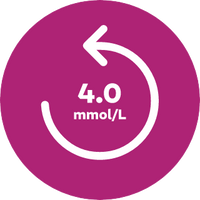
If necessary or until your blood sugar level gets to 4.0 mmol/L or above

A balanced meal as soon as possible to prevent a relapse.
Examples of fast-acting glucose preparations include glucose tablets, glucose gel, liquid glucose and glucose shots.
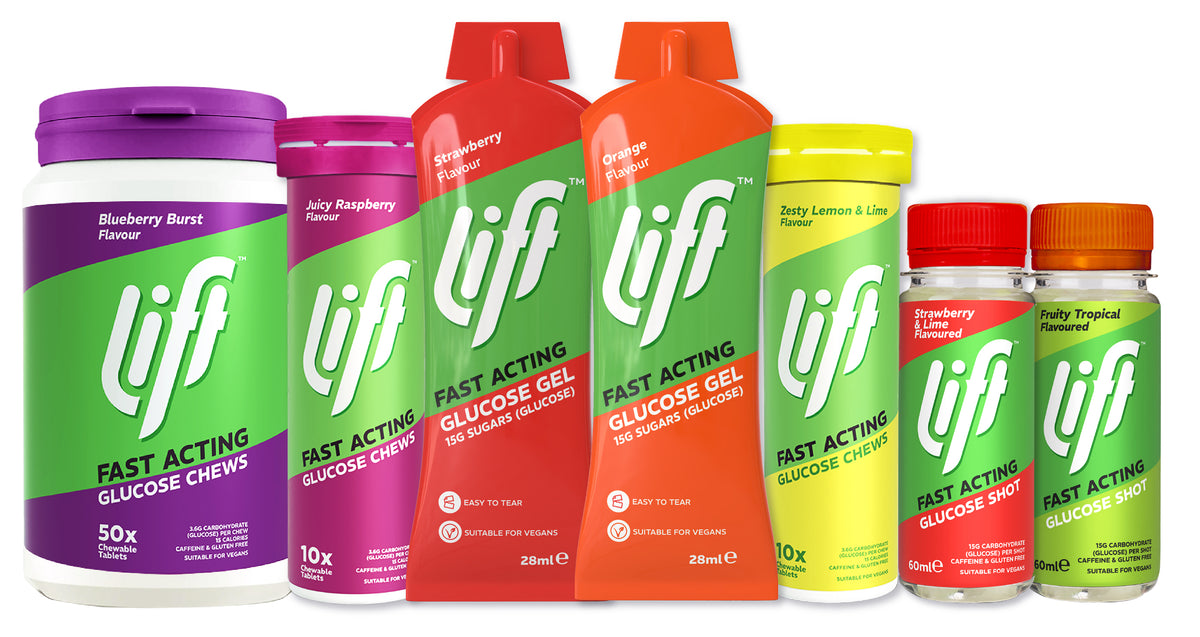
Lift® provides a range of fast-acting glucose products designed to help people manage hypoglycaemia wherever and whenever it occurs. The Lift range is free from gluten, caffeine, taurine and fat and is suitable for vegans.

Portable liquid glucose for fast-acting hypo management. Available in Strawberry & Lime, Zesty Lemon & Lime, Tropical and Very Berry flavours.

Convenient glucose gel format for use on the go, available in Strawberry and Orange flavours.

A chewable glucose option delivering a measured dose of glucose, available in Blueberry, Lemon & Lime, Raspberry and Orange flavours.

Glucogel is for moderate hypoglycaemia when a person is confused or uncooperative but still conscious and able to swallow, available unflavoured.
Order Lift Fast Acting Glucose Shots, Gels, Chews and Glucogel samples directly to your workplace.
Give patients the opportunity to try different formats and discover the product that best suits their lifestyle and flavour/format preferences.
Complete the form below to request your free sample pack of the Lift core range, or the Lift range plus Glucogel. Each sample pack contains enough products to distribute to multiple patients.
Please note that a valid NHS email address is required to qualify for this free service.
Complete the form below to request samples for your patients. This service is available to eligible healthcare professionals.
References
1. Gromova LV, et al. Mechanisms of glucose absorption in the small intestine in health and metabolic diseases and their role in appetite regulation. Nutrients. 2021 2. Chandel NS. Carbohydrate metabolism. Cold Spring Harbor Perspectives in Biology. 2021 3. Joint British Diabetes Societies for Inpatient Care (JBDS-IP). The Hospital Management of Hypoglycaemia in Adults with Diabetes Mellitus. 4th edition. 2023. 4. Slama G, et al. The search for an optimized treatment of hypoglycemia: carbohydrates in tablets, solution, or gel? Diabetes Care. 1990 5. Carlson J, et al. Dietary sugars versus glucose tablets for first-aid treatment of symptomatic hypoglycaemia in awake patients with diabetes: a systematic review and meta-analysis. Emergency Medicine Journal. 2017 6. NICE NG17. Type 1 diabetes in adults: diagnosis and management. 7. NICE NG18. Diabetes (Type 1 and Type 2) in children and young people: diagnosis and management.
* NHS Prescription Data, August 2026